
Clean Energy Drinks Without Jitters: A 2026 Guide
Table of Contents
- Why Clean Energy Drinks Without Jitters Are Worth Choosing
- What Causes Jitters, and How Much Caffeine Is Too Much
- Low Caffeine Energy Drinks: Finding the Right Milligram Range
- Energy Drinks Without Caffeine: When You Want Zero Stimulants
- Energy Drinks for Focus Without Jitters: Ingredients That Matter
- How to Get Energy Without Caffeine: Daily Habits That Compound
- How to Compare Clean Energy Drinks Side by Side
- Frequently Asked Questions
Last Updated: October 21, 2026
Why Clean Energy Drinks Without Jitters Are Worth Choosing
Most energy drinks solve one problem and create two more. You get the lift, then the shakes, then the crash. Clean energy drinks without jitters are built to break that cycle: lower caffeine, no sugar, and ingredients chosen for steady output rather than a spike. At Drink Default, we built our whole product around that idea, because the alternative is a can that makes you feel worse by 3 p.m. than you did before you opened it.
The case for switching is simple. A drink that delivers 80mg of caffeine and zero sugar gives you a usable lift without flooding your system. The FDA guidance on caffeine and how much is generally safe is a good starting point for understanding your own ceiling. Below, we'll show you exactly how to read a label, pick a milligram range that fits your tolerance, and spot the ingredients that separate smooth energy from a jittery mess.
What Causes Jitters, and How Much Caffeine Is Too Much
Jitters are not a moral failing or a sign you're "weak to caffeine." They're a predictable response to how much caffeine reaches your bloodstream, how fast it gets there, and how your particular body clears it. Understanding those variables is what lets you pick a drink instead of guessing.
The dose is the biggest lever. The FDA's guidance on caffeine notes that 400mg per day is generally not associated with negative effects for most healthy adults. That's a daily ceiling for the general healthy adult population, not a per-sitting target and not a guarantee for you personally.
Speed of absorption matters as much as total dose. Caffeine in a liquid is absorbed quickly, which is why a shot-style drink can feel like a switch flipping. Food in your stomach slows gastric emptying and smooths the curve.
Timing and stacking compound. Caffeine has a half-life of roughly five hours in a typical healthy adult, though that range varies widely person to person. A 2 p.m. can still has meaningful caffeine in your system at 7 p.m.
Other stimulants add up. Many energy products include additional caffeine sources (guarana, yerba mate, green tea extract) plus stimulant-adjacent ingredients. A label that lists 80mg of caffeine but also contains guarana may deliver more total stimulant effect than the number suggests. Read the full stimulant load, not just the caffeine line.
Individual sensitivity is real and varies widely. Genetics, body weight, medications, and tolerance all shift your personal threshold. A common pattern: people who feel clammy hands or a racing pulse from one cup of coffee are low-dose responders, and a 30-50mg serving is a more sensible starting point than an 80-100mg one. There's no prize for matching a coworker's tolerance.
Who should be more cautious. The American Academy of Pediatrics advises that adolescents avoid caffeine. Anyone pregnant, breastfeeding, managing a heart condition or anxiety disorder, or taking medications that interact with stimulants should talk to a clinician before adding caffeine products. This is general information, not medical advice.
Low Caffeine Energy Drinks: Finding the Right Milligram Range
Low caffeine energy drinks sit roughly between 30mg and 100mg per serving. That range covers most people who want alertness without anxiety. For reference, a standard cup of coffee lands around 95mg, so a low-dose can is often less than your morning brew.
Here's how we'd map it:
| Caffeine per serving | Best for | Watch out for |
|---|---|---|
| 30-50mg | Caffeine-sensitive adults, late afternoon | May feel too mild if you drink coffee daily |
| 60-90mg | Everyday focus, long workdays | Stacking with coffee pushes you over |
| 100-150mg | Higher tolerance, morning use | Jitter risk rises fast above 100mg |
The thing nobody tells you about low-dose caffeine: it works best when you stop stacking. If you drink two coffees and then a 80mg can, you're not at 80mg anymore. You're at 250mg, and the jitters are yours.
Energy Drinks Without Caffeine: When You Want Zero Stimulants
Energy drinks without caffeine exist, and they're worth knowing about. They lean on B vitamins, electrolytes, and herbal ingredients rather than stimulants. If you're cutting caffeine entirely, or you want something for evening work, these are your option.
What they won't do is wake you up the way caffeine does. That's the honest trade-off. A zero-caffeine drink supports hydration and delivers vitamins, but the alertness has to come from somewhere else: cold water, a short walk, daylight.
For people who are caffeine-sensitive but still want a lift, the middle path works better. A modest dose, around 80mg, gives you wakefulness without the anxiety that a high-stimulant can triggers. That's the balance we designed Blue Lemon around, and it's the reason we keep the dose fixed rather than chasing intensity.
Energy Drinks for Focus Without Jitters: Ingredients That Matter
Energy drinks for focus without jitters share a pattern: modest caffeine, no sugar, and ingredients that support steady attention. Read the ingredient list before the front label, because the front label is marketing and the back is chemistry.
What to look for:
- Caffeine amount in milligrams listed clearly, not hidden in a blend
- Zero sugar or low sugar, since a sugar spike is its own crash
- Green tea extract or matcha, which pair caffeine with L-theanine for a calmer lift
- Electrolytes for hydration, especially if you're drinking this instead of water
- B vitamins for general support, though they won't replace sleep
What to be skeptical of: proprietary blends that hide caffeine amounts, added sugars above a few grams, and "energy" claims with no numbers behind them. Green tea and matcha are popular for a reason: the caffeine arrives more gradually, and the L-theanine softens the edge. Ginseng and rhodiola appear often too, though the evidence for a noticeable effect in a single can is modest.
How to Get Energy Without Caffeine: Daily Habits That Compound
Learning how to get energy without caffeine is less about one trick and more about a handful of habits that stack. None of them are glamorous. All of them work.
- Get daylight within an hour of waking, which anchors your body clock
- Drink water before your first coffee, since mild dehydration reads as fatigue
- Take a 10-minute walk after lunch instead of a second stimulant
- Keep a consistent sleep and wake time, even on weekends
- Eat protein with lunch to avoid the 2 p.m. blood-sugar dip
A coffee alternative helps here too. Matcha, kombucha, and yerba mate all deliver caffeine more slowly than coffee, and they're easy to rotate in. The point isn't to eliminate caffeine. It's to stop using it as a rescue tool and start using it as a small, reliable input.
How to Compare Clean Energy Drinks Side by Side
Most roundups tell you which can tastes best. That's the least useful comparison. What actually determines whether a clean energy drink works for you is caffeine dose, sugar, total stimulant load, serving size, and cost per serving, and those are the numbers you can line up in ten minutes.
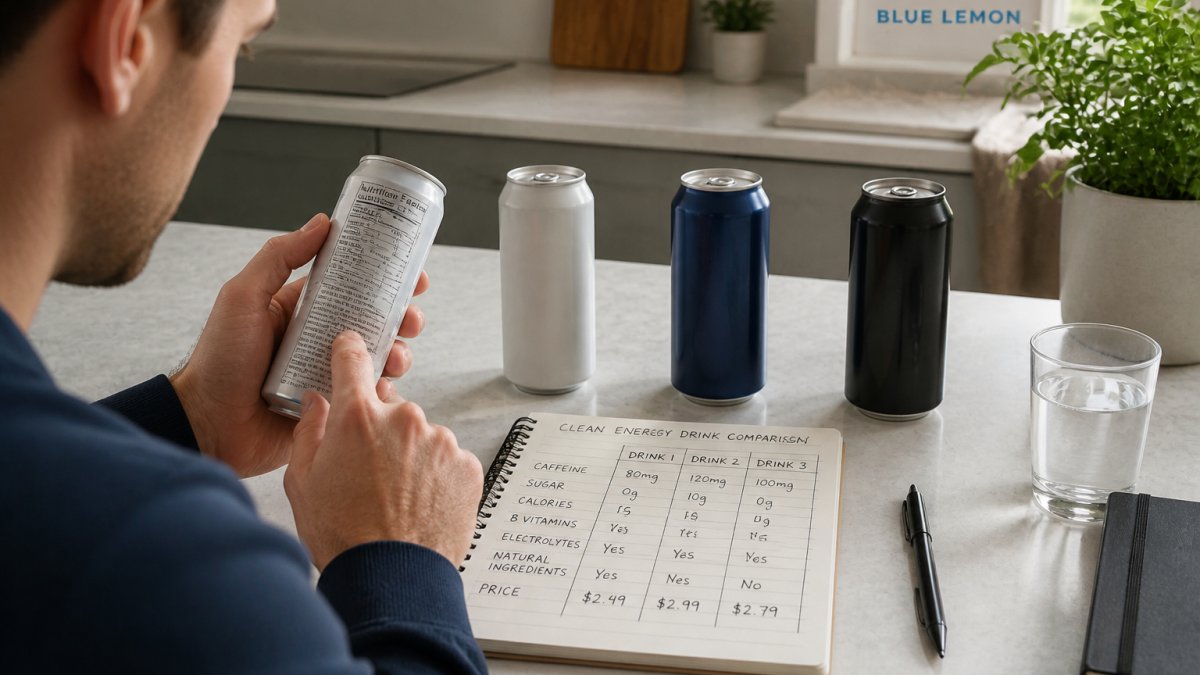
Build a five-column comparison. For each candidate, write down:
- Caffeine per serving, in milligrams, and whether the label states it directly or hides it in a proprietary blend
- Sugar and calories per serving, with the serving size clearly noted (a can is not always one serving)
- Total stimulant load, caffeine plus any guarana, yerba mate, green tea extract, or other caffeine-containing botanicals
- Sweetener type, stevia, monk fruit, sucralose, sugar, or none
- Cost per serving, calculated from the multi-pack price divided by the number of servings
Do the cost-per-serving math, not the sticker math. A 12-pack at one price and a 4-pack at another can look very different per can. Divide total price by total servings before you decide. A cheaper can you drink half of is worse value than one you finish.
Score against your use case, not a generic ranking. A caffeine-sensitive person doing late-afternoon work should weight 30-50mg options heavily and ignore 150mg cans entirely. Someone with a high tolerance and an early start has different priorities.
Watch for the three most common label traps. First, proprietary blends that list "energy blend" without a caffeine number. Second, added sugars above a few grams per serving, which reintroduce the crash the drink is supposed to solve. Third, "natural caffeine" claims that don't tell you the dose, natural sources still contain caffeine, and the milligram number is what matters.
A worked example. Suppose Can A is 80mg caffeine, zero sugar, one can per serving, sold in a 12-pack. Can B is 160mg caffeine, 12g sugar, one can per serving, sold in a 4-pack. On paper Can B may look cheaper per can. But Can B delivers double the caffeine and a sugar load, which changes both the jitter risk and the crash profile.
That's the framework behind our own product. Blue Lemon is 80mg of caffeine, zero sugar, and built for repeat use rather than occasional intensity. It won't be the strongest can on the shelf, and that's deliberate. We think consistency beats intensity, and the comparison checklist above is how you decide whether that trade-off fits you.
Frequently Asked Questions
How much caffeine should you look for in an energy drink?
For most healthy adults, 50 to 100 milligrams per serving is a moderate range that supports alertness without pushing into jitter territory. The FDA cites 400 milligrams per day as a level generally not associated with harmful effects for healthy adults, but that is a daily ceiling, not a per-can target. A drink with 80 milligrams, roughly a cup of coffee, gives a noticeable lift while leaving room for other caffeine during the day. If you are sensitive, start lower and see how your body responds.
Are zero-sugar energy drinks less likely to cause jitters?
Sugar is not the main driver of jitters, caffeine is. That said, zero-sugar options help in a different way: they avoid the rapid blood sugar spike and subsequent crash that can feel like shakiness or fatigue an hour after drinking. A sugar-free drink with moderate caffeine gives steadier energy across a work session. Check the sweetener used, since some people report headaches from certain sugar alcohols, and pick a can whose ingredient list you are comfortable with.
What ingredients in energy drinks can contribute to jitters?
Caffeine is the biggest factor, especially doses above 150 milligrams or fast absorption from concentrated shots. Added sugars and large carbohydrate loads can cause a rebound crash that mimics jitteriness. Some people are sensitive to herbal stimulants like guarana or yerba mate, which add caffeine on top of the listed amount. Niacin and B-vitamin blends occasionally cause flushing or a tingling sensation. Read the full ingredient list and total caffeine, not just the front-of-can claims.
How can I get energy without caffeine during a long workday?
Stack small habits: drink water before reaching for another stimulant, since mild dehydration reads as fatigue. Take a five-minute walk or stand during calls to raise blood flow. Eat a lunch with protein and fiber rather than a heavy carb load, which triggers an afternoon dip. A short 15-minute nap before 2 p.m. restores alertness for many people. Pair these with a low-caffeine drink in the morning and you can often skip the second and third coffee entirely.
The real challenge isn't finding a can with caffeine in it. It's finding one you can drink every day without paying for it later in jitters or a crash. Drink Default was built for exactly that: 80mg of caffeine, zero sugar, and a clean Blue Lemon flavor designed for work, study, and long afternoons. Start with one can and see how your body responds. Get started with Drink Default and make clean energy part of your daily routine.