
Energy Drinks With Simple Ingredients: Review Guide
Table of Contents
- What 'Simple Ingredients' Actually Means on an Energy Drink Label
- How Much Caffeine Is in Energy Drinks? Serving Sizes Compared
- Energy Drink Ingredients to Avoid (and What to Accept)
- Energy Drinks With No Artificial Sweeteners: What to Check
- The Best Natural Energy Drinks Are the Ones You Can Read
- Sugar, Sweetener, and Calorie Trade-Offs That Change the Verdict
- Taste, Aftertaste, and the Metallic Problem
- Conclusion
- Frequently Asked Questions
Last Updated: October 19, 2026
What 'Simple Ingredients' Actually Means on an Energy Drink Label
"Simple ingredients" is not a regulated term, which is why it appears on so many cans. At Drink Default, we treat it as a working standard: a short list you can read aloud, where every item is a recognizable food or named extract rather than a lab compound.
The FDA requires ingredients to be listed by common name in descending order of weight, per FDA food labeling guidance, but it does not police the word "simple." So the burden lands on you.
A Working Definition You Can Shop With
A label passes our test when it meets four conditions:
- Ten ingredients or fewer, not counting water and carbonation
- Caffeine source is named (tea, coffee, guarana, or added caffeine)
- No artificial colors, and no dyes listed by number
- Sweeteners are either absent or named plainly
Anything that fails two or more of those is a flavored beverage with a marketing team, not a simple formula.
Where the Label Still Hides Things
Watch for "natural flavors," a legal category covering dozens of possible compounds that tells you nothing. The same goes for "proprietary blend," which lets a brand list a total milligram amount without breaking down each component. A label can look clean and still keep you in the dark.
How Much Caffeine Is in Energy Drinks? Serving Sizes Compared
Caffeine content is where the category splits hardest. A standard 8-ounce cup of coffee lands around 95 mg, while many 16-ounce energy cans run 150 to 200 mg, and some push past 300 mg. The FDA guidance on caffeine and how much is too much puts 400 mg per day as a level most healthy adults can reach without negative effects.
That daily ceiling reframes the shopping question. It is not "how much caffeine does this can have" but "how many cans fit inside my day."
Why 80 mg Is a Different Product Category
An 80 mg can is roughly the caffeine in a small coffee, and it changes how the drink functions: one mid-morning and another at 2 p.m. stays well under the daily limit. A 200 mg can offers no such flexibility.
That is the design logic behind our own can: 80 mg, zero sugar, built for a workday rather than a pre-workout. The difference between a moderate lift and a spike is a dosing decision, not a flavor one.
| Drink Style | Typical Caffeine | Serving Size | Fits Twice a Day? |
|---|---|---|---|
| Small coffee | ~95 mg | 8 oz | Usually |
| Moderate energy can | ~80 mg | 12 oz | Yes |
| Standard energy can | 150-200 mg | 16 oz | Often not |
| High-intensity can | 300 mg+ | 16 oz | No |
Energy Drink Ingredients to Avoid (and What to Accept)
The ingredient list is the only honest part of the can.
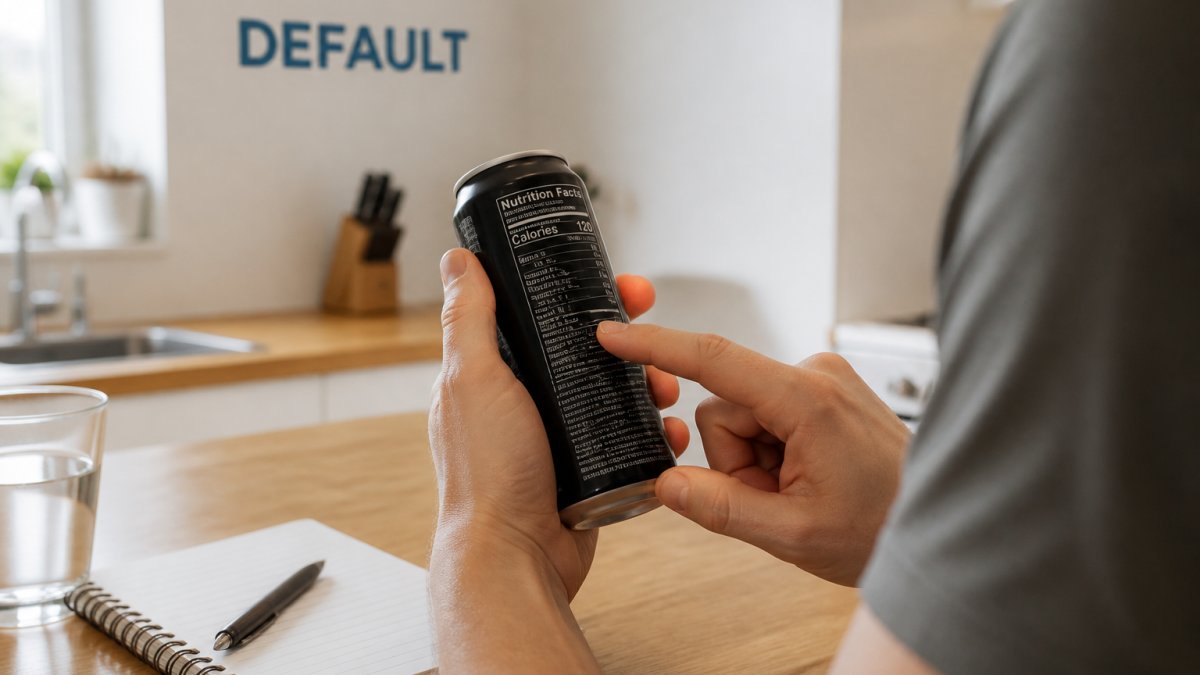
What you can reasonably accept: citric acid, natural caffeine from tea or coffee, B vitamins, and electrolytes.
A common mistake is treating "zero sugar" as automatically clean. A zero-sugar can sweetened with three artificial sweeteners is not a simple formula but a reformulated one.
Energy Drinks With No Artificial Sweeteners: What to Check
Finding energy drinks with no artificial sweeteners takes about thirty seconds once you know the names. Scan the sweetener line for sucralose, aspartame, acesulfame potassium, and saccharin.
The alternatives are stevia, monk fruit, and small amounts of real sugar. Each has a trade-off: stevia can carry a licorice note, monk fruit is expensive, and sugar adds calories.
Our Blue Lemon flavor takes that last route. Zero sugar, no artificial sweeteners, and a citrus profile that does not rely on a sweetener to cover a metallic base.
The Best Natural Energy Drinks Are the Ones You Can Read
Most roundups of natural energy drinks either list recipes or repeat marketing claims. This section scores a representative set of widely available cans against the same four criteria, using current ingredient panels and caffeine disclosures, not to crown a winner, but to show how one drink can look simple on one measure and complicated on another.
The Scoring Method
Each drink is scored 1-5 on four criteria, for a maximum of 20:
- Ingredient count, 5 points for 10 or fewer ingredients (excluding water and carbonation), scaling down to 1 point for 20 or more.
- Caffeine transparency, 5 points if the caffeine source is named and the milligrams per can are disclosed; 1 point if caffeine is hidden in a proprietary blend.
- Sweetener quality, 5 points for no sweetener or a plainly named natural sweetener (stevia, monk fruit, sugar); 1 point for multiple artificial sweeteners.
- Additive load, 5 points for no artificial colors, no artificial flavors, and no vague "natural flavors"; 1 point if two or more of those appear.
Scores reflect the label as printed, not brand claims, so a drink can score well on caffeine and poorly on sweeteners.
How Representative Cans Score
| Drink | Ingredient Count | Caffeine Source & Dose | Sweetener | Additives | Score /20 |
|---|---|---|---|---|---|
| Canned cold brew coffee (black) | 2 | Coffee, ~150 mg per 11 oz can | None | None | 20 |
| Sparkling water with caffeine | 3-4 | Added caffeine, ~80 mg per 12 oz can | None | None | 19 |
| Yerba mate canned tea | 5-6 | Yerba mate, ~90 mg per 12 oz can | Cane sugar | None | 17 |
| Green tea energy can | 8-10 | Green tea extract, ~100 mg per 12 oz can | Stevia | Natural flavors | 14 |
| Mainstream zero-sugar can | 12-15 | Added caffeine, ~180 mg per 16 oz can | Sucralose, acesulfame potassium | Artificial flavors, dyes | 7 |
| "Natural" energy can with blend | 10-12 | Proprietary blend, undisclosed mg | Monk fruit | Natural flavors | 9 |
Two patterns stand out. The simplest cans are often the least marketed, black cold brew and caffeinated sparkling water win on transparency because they have almost nothing to hide. And the drinks that advertise "natural" loudest tend to lose points on vague flavorings or undisclosed caffeine blends.
What the Scores Do Not Tell You
A high score is not a taste guarantee. Black cold brew scores 20 but is bitter and unsweetened; a drinker who wants a light, citrus-forward can will find it harsh. A score of 14 can still be a reasonable daily choice if the only deductions are a named natural flavor and stevia. Use the score to narrow the shelf, then let taste and caffeine dose decide.
Sugar, Sweetener, and Calorie Trade-Offs That Change the Verdict
Sugar and sweetener choices are where "simple ingredients" claims most often fall apart. A can can be low in calories and still carry three artificial sweeteners, or full-sugar and use only cane sugar. The right choice depends on how you plan to use the drink.
Sweetener-by-Sweetener Trade-Offs
| Sweetener | Calories per Can (typical 12 oz) | Ingredient-List Read | Common Drawback |
|---|---|---|---|
| Cane sugar or honey | 100-130 | Plainly named, recognizable | Blood-sugar spike; calories add up |
| Stevia (reb A) | 0-5 | Named plant extract | Licorice or bitter finish at high doses |
| Monk fruit | 0-5 | Named fruit extract | Higher cost per can; mild aftertaste |
| Sucralose | 0-5 | Artificial | Some drinkers report headaches or a chemical finish |
| Aspartame | 0-5 | Artificial | Not suitable for people with phenylketonuria |
| Acesulfame potassium | 0-5 | Artificial | Often paired with sucralose; lingering finish |
| No sweetener | 0 | Cleanest label | Tart or bitter; not for everyone |
A can with a single named sweetener is easier to evaluate than one with a blend of three. Blends exist to mask each other's aftertastes, a formulation decision, not a simplicity one.
Calorie Math for a Workday
A full-sugar 12-ounce can at 27 grams of sugar adds about 110 calories. The Dietary Guidelines for Americans recommend keeping added sugars under 10% of daily calories, which one full-sugar can can consume most of.
Caffeine dose matters here too. A 200 mg can is harder to fit twice into a day than an 80 mg can, so calorie and caffeine decisions are linked: the lower the caffeine, the more often you might drink it, and the more the sweetener choice compounds.
Price and Value per Serving
Cost per can is misleading because sizes and doses vary. A more useful number is cost per 80 mg of caffeine:
- A 12-ounce can with 80 mg of caffeine at $2.50 works out to about $2.50 per 80 mg serving.
- A 16-ounce can with 160 mg at $3.00 works out to about $1.50 per 80 mg serving.
- A 16-ounce can with 200 mg at $3.50 works out to about $1.40 per 80 mg serving.
On that basis, higher-caffeine cans often look cheaper per milligram, but only if you want that dose. If you cap your day at 160 mg, a 200 mg can is partly wasted. Calculate price per serving against the dose you will actually drink, not the dose printed on the can.
Taste, Aftertaste, and the Metallic Problem
The metallic taste people describe in energy drinks usually comes from one of three sources: artificial sweeteners, added vitamins and minerals, or high caffeine doses.
A taste test should be structured. Sip at room temperature, wait thirty seconds, and note the finish. A clean finish fades; a metallic one lingers.
What most reviews miss is that aftertaste is dose-dependent. The same formula at 80 mg tastes cleaner than at 200 mg, because you are tasting less of the bitter compound.
Conclusion
The energy drink aisle rewards reading, not branding. Start with the ingredient count, confirm the caffeine source and dose, then decide whether the sweetener fits your day. That three-step habit separates a genuinely simple can from a clever label faster than any badge.
If you want a can built around that standard, Drink Default makes one: 80 mg of caffeine, zero sugar, no artificial sweeteners, and a clean Blue Lemon finish designed for a workday rather than a spike. Get started with Drink Default and see what moderate, consistent energy feels like.
Frequently Asked Questions
What energy drinks have the simplest ingredients?
The simplest cans usually list five to eight recognizable items: carbonated water, caffeine, a natural sweetener like stevia or monk fruit, natural flavor, and maybe citric acid. Anything with more than a dozen entries, or with colors and preservatives you cannot picture, is not simple. Read the full panel, not the front label, because 'natural' on the front does not guarantee a short list on the back.
Are natural sweeteners better than artificial sweeteners in energy drinks?
For most people, plant-derived sweeteners such as stevia and monk fruit avoid the aftertaste and headache complaints some report with sucralose and aspartame. They are not calorie-free magic, and stevia has its own bitter edge at high doses. The practical test is a small can: if the sweetness tastes clean and does not linger, the sweetener works for you. Check the label for which one is used and how far down the list it appears.
How much caffeine is in a typical energy drink, and is 80 mg enough?
Many mainstream cans run 150 to 200 mg per can, and some large-format drinks exceed 300 mg. An 80 mg can sits closer to a strong cup of coffee. For a full workday, that lower dose often means you can drink one in the morning and still sleep normally, rather than stacking cans to chase a crash. If you are used to 200 mg, an 80 mg can will feel mild by comparison.
Can energy drinks with simple ingredients still contain artificial additives?
Yes. A short ingredient list can still include synthetic caffeine, added vitamins, or a 'natural flavor' blend that hides several compounds. Simple is a starting filter, not a guarantee. Look for the word 'caffeine' without a source qualifier, check whether vitamins are listed individually, and treat vague flavor terms as a reason to contact the brand before you commit to a case.